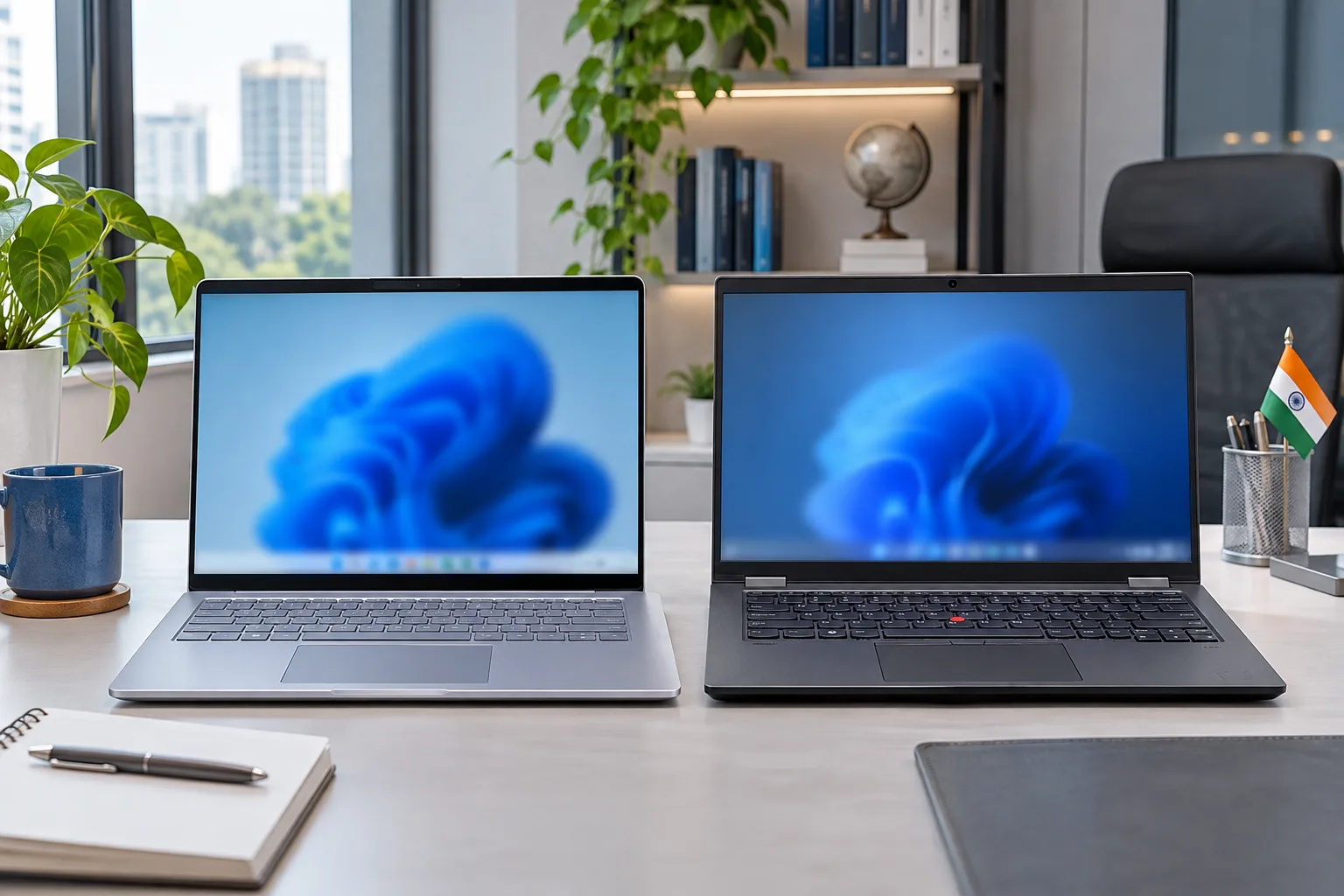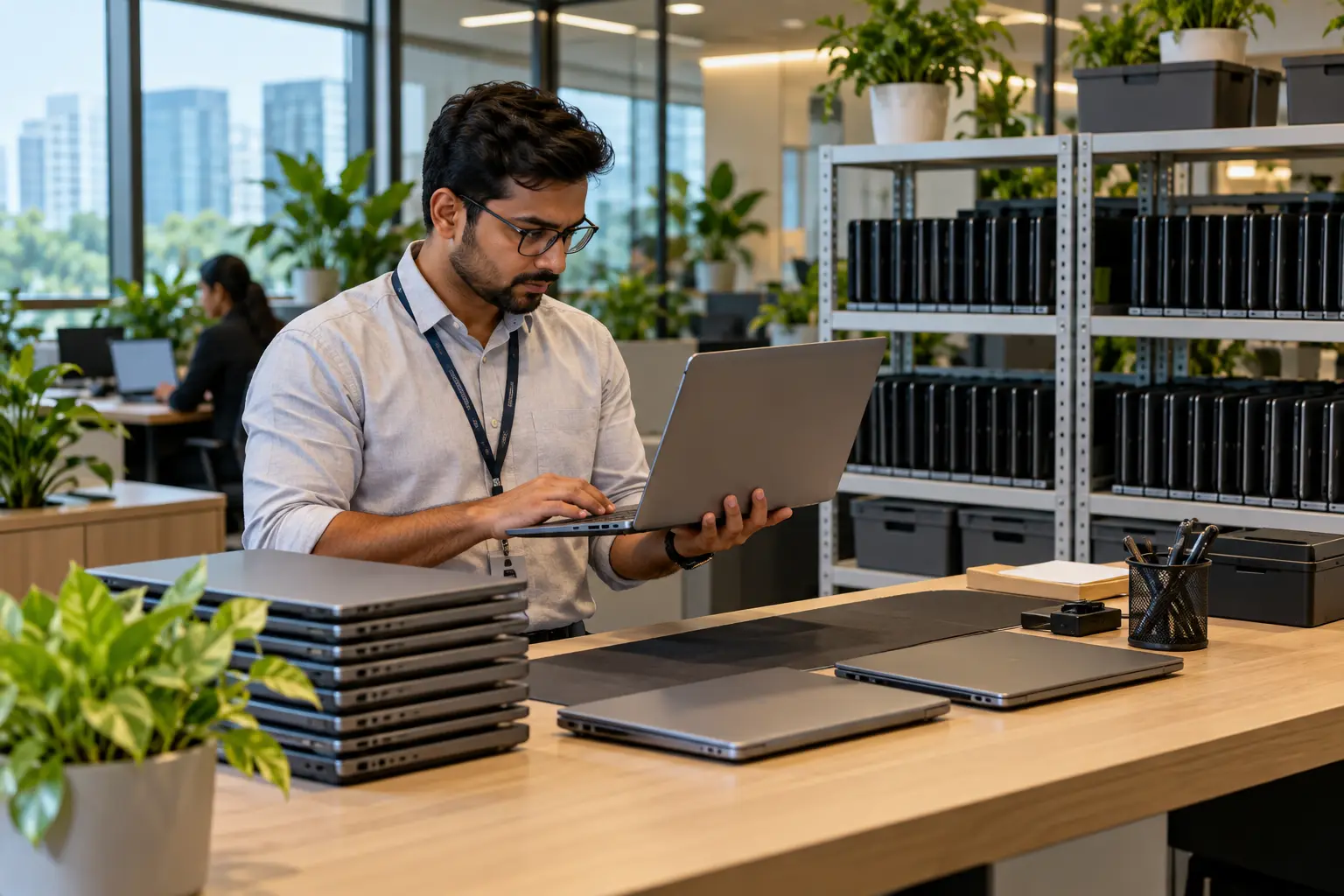
Laptop rental sustainability can help reduce e-waste when laptops stay in productive use for longer instead of being purchased for short requirements and discarded or stored afterwards. By allowing one device to serve multiple users over its useful life, rental can support reuse, better utilisation and more responsible IT procurement. The environmental benefit depends on maintenance, redeployment and proper end-of-life recycling.
India's growing e-waste volumes make this increasingly relevant for businesses and individual users.
Why is e-waste a growing problem?
Electronic waste includes computers, phones, displays and other electrical or electronic equipment that reaches the end of its useful life. The challenge is growing quickly as technology adoption increases and devices are replaced more frequently.
According to India's Ministry of Environment, Forest and Climate Change, citing CPCB estimates, India generated approximately 1.398 million tonnes of e-waste in FY 2024-25, compared with about 1.254 million tonnes in FY 2023-24. The government reported that 70.71% of estimated e-waste was collected, dismantled and recycled or disposed of through the tracked system in FY 2024-25.
The issue is global too. The International Telecommunication Union reported that 62 million tonnes of e-waste were generated worldwide in 2022, while only 22.3% was documented as formally collected and recycled.
Laptops form only one part of this larger waste stream, but how organisations purchase, use and replace computers can still influence the amount of equipment reaching end of life.
How does laptop rental reduce e-waste?
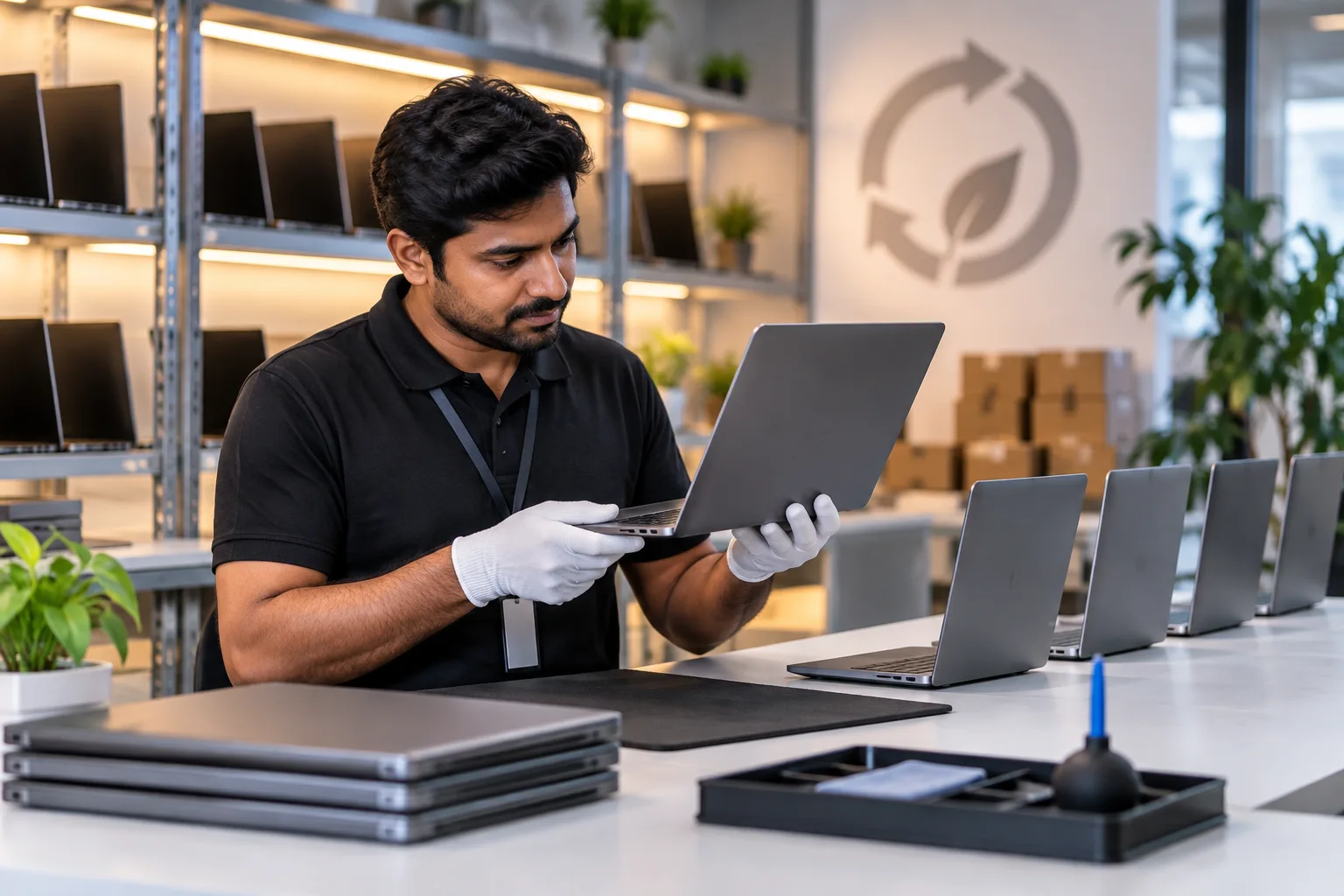
Laptop rental can reduce unnecessary hardware turnover by keeping devices in use across more than one customer or project. Instead of purchasing a new laptop for every temporary requirement, the same suitable machine can potentially be maintained, returned and redeployed.
This changes the usual ownership pattern. A company might buy 50 laptops for a six-month contract team and then have many of those devices sitting unused when the project ends. With rental, those devices can return to the rental pool and be used for another requirement.
That matters because sustainability is not just about recycling a laptop after it becomes waste. Keeping functional equipment in productive use for longer can delay the point at which another device has to be manufactured or an existing one has to be discarded.
India's E-Waste Management Rules, 2022 also recognise refurbishment as part of the formal e-waste framework. The rules allow producer responsibility to be deferred when equipment receives an extended life through registered refurbishment.
Is reuse better than early replacement?
In many situations, yes. A functioning laptop does not automatically become environmentally responsible simply because it is replaced with a newer, more efficient model. Manufacturing a new computer also requires materials, energy, components, packaging and transportation.
Extending the useful life of an existing device can therefore be an important part of sustainable IT practices.
Evidence from manufacturers supports the value of longer device lifecycles. HP states that its certified refurbished EliteBook 840 G8 can have up to a 64% lower carbon footprint than purchasing an equivalent first-life device, based on its life-cycle assessment methodology. That figure applies to the specific comparison HP studied, so it should not be treated as a universal percentage for every refurbished or rented laptop.
Rental follows a similar circular principle when equipment remains serviceable, is maintained and is successfully redeployed instead of being retired unnecessarily.
Does renting always make IT sustainable?
No. Renting a laptop is not automatically sustainable.
The environmental case becomes stronger when the provider keeps devices in active service, maintains them properly, redeploys them between customers and sends equipment through responsible recycling or refurbishment channels when it can no longer be used.
A rental model would offer much less environmental value if laptops were frequently replaced, transported inefficiently or discarded prematurely.
For businesses, this means sustainability should be considered across the whole device lifecycle, not just at procurement. Intel's guidance on sustainable IT practices similarly recommends considering manufacturing, procurement, management, reuse, repurposing and recycling across the PC lifecycle.
How does renting compare with buying?
Renting and buying can both be sensible choices. The more sustainable option depends largely on how long the device is required and how efficiently it will be used.
| Requirement | Renting may suit | Buying may suit |
| Short project | Yes | Usually less practical |
| Temporary employees | Yes | Can create unused stock |
| Training or event | Yes | Often unnecessary |
| Rapidly changing team size | Yes | Less flexible |
| Continuous multi-year use | Depends | Often suitable |
| Specialist short-term hardware | Yes | High upfront purchase |
Buying a laptop that remains productive for several years can also be sustainable. The waste problem appears when organisations purchase more equipment than they need, replace working machines too early or fail to manage old devices responsibly.
The goal should be better utilisation, not renting simply for the sake of renting.
Can laptop rental lower IT costs?
Rental can also reduce upfront spending when the requirement is temporary. Instead of purchasing equipment for a short project, you pay for access during the period it is required.
Rentlap's current inventory includes business laptops such as the Acer TravelLite with 16GB RAM and 512GB SSD at around ₹2,199 per month, while other configurations vary significantly depending on performance, brand and specifications. Current laptop listings extend from budget business systems to high-end workstations and gaming machines.
You can compare available laptops for rent from Rentlap before deciding whether temporary rental or long-term ownership makes more financial sense.
For corporate teams, the biggest saving may come from avoiding unnecessary purchases. If 20 laptops are required for only three months, buying 20 new devices can tie up capital and create an asset management problem once the requirement ends.
How can businesses build sustainable IT?

Businesses can combine laptop rental with better device planning rather than treating sustainability as a separate IT activity.
A practical approach includes:
• Match devices to actual roles. Office employees may not need the same high-end hardware as developers, designers or engineers.
• Rent for temporary demand. Contract teams, interns, training programmes and short projects are strong use cases.
• Keep useful devices working longer. Maintenance and responsible handling can help prevent premature replacement.
• Plan the end of the lifecycle. Reuse and refurbishment should come before responsible recycling where the device remains suitable.
This approach can reduce idle hardware while still giving employees the configuration they need.
Recent research into circular IT also highlights role-based device allocation, lifecycle management and reuse as practical ways organisations can balance performance, costs and sustainability.
What does e-waste reduction mean in India?
For e-waste reduction in India, recycling is only one part of the solution. Preventing equipment from becoming waste too early is equally relevant.
India's current regulatory framework places greater responsibility on producers, recyclers and refurbishers. The E-Waste Management Rules, 2022 came into force on 1 April 2023 and introduced an Extended Producer Responsibility framework along with provisions covering recycling and refurbishment.
For companies purchasing large quantities of IT equipment, this creates a stronger reason to think beyond the initial purchase. Device utilisation, repair, reassignment, return, refurbishment and final recycling all matter.
Laptop rental can fit within this circular approach because ownership and lifecycle management remain separate from the employee's temporary need for the device.
What happens when a rental ends?
At the end of the rental period, the device is returned rather than becoming surplus equipment for the customer. That creates an opportunity for it to be inspected and prepared for future use if it remains suitable.
For Rentlap customers, the return process also includes practical responsibilities. Customers are expected to return devices in acceptable working condition and remove passwords, account locks, encryption restrictions and similar software locks before return, as explained in Rentlap's damage and return policy.
You should back up required files and remove personal or company information before handing back a rental laptop. Businesses handling confidential data should also apply their own approved data sanitisation process and confirm any additional requirements with the rental provider before return.
What should you check before renting?
Sustainability should not make you overlook the practical rental terms.
Rentlap may require identity, address, employee, student or business verification depending on the order. Its KYC and verification policy explains that requirements can vary according to the customer, device value, rental period, quantity and location.
Security deposits also vary by device. Current mainstream laptop listings show refundable deposits around ₹5,000 for several business models, while higher-value systems can require considerably larger deposits.
Current product listings commonly show expected delivery within two to five days, with faster delivery displayed for selected available products. Check the delivery and pickup policy and confirm the minimum rental duration, deposit, pickup terms and availability before booking.
You should also review what damage protection or insurance applies to your particular order instead of assuming every type of accidental damage is covered.
Can students and freelancers benefit too?
Yes. Laptop rental sustainability is not limited to large corporate IT teams.
Students who need a capable laptop for a semester, internship or project may not need to purchase a new machine. A freelancer handling a short editing, development or design assignment may also need higher-end hardware for only a limited period.
In these cases, renting gives you access to the required configuration without creating a long-term ownership problem once the requirement ends.
The sustainability benefit is strongest when that returned laptop continues to serve other customers instead of becoming unused equipment.
Conclusion
Laptop rental sustainability is mainly about getting more useful work from each device before it reaches end of life.
For temporary teams, projects, students, freelancers and businesses with changing hardware requirements, renting can reduce unnecessary purchases and prevent usable laptops from becoming idle assets. Combined with maintenance, repeated use, secure data handling and responsible end-of-life management, it can support broader e-waste reduction in India.
Get a laptop rental quote from Rentlap if you need devices for a temporary project, employee onboarding or changing team requirement. Explore available laptop rentals or contact Rentlap for corporate and bulk rental requirements.
Laptop Rental Sustainability FAQs
These common laptop rental sustainability questions explain how rental, reuse and better device management can support lower e-waste generation.
1. Does renting laptops reduce e-waste?
It can. Renting keeps laptops available for reuse after one customer's requirement ends. The benefit depends on devices being maintained, redeployed and responsibly handled instead of being replaced or discarded too early.
2. Is renting greener than buying?
Not always. Buying can also be sustainable when a laptop is used productively for many years. Renting is particularly useful for temporary requirements where buying new equipment could leave devices unused later.
3. How does laptop reuse help sustainability?
Reuse extends the productive life of existing hardware. This can delay the need for another new device and helps reduce premature disposal of functional electronics.
4. What are sustainable IT practices?
Sustainable IT practices include choosing appropriate hardware, extending device lifecycles, reducing unnecessary purchases, improving energy efficiency, reusing equipment and ensuring responsible refurbishment or recycling at end of life.
5. Should businesses rent laptops for short projects?
Rental can make sense for contract teams, temporary employees, training programmes and short projects because the laptops can be returned after use instead of remaining as unused company assets.
6. What should I do before returning a laptop?
Back up any files you need, sign out of accounts and remove personal or business data. Also remove passwords, device locks and encryption restrictions according to the applicable rental terms.