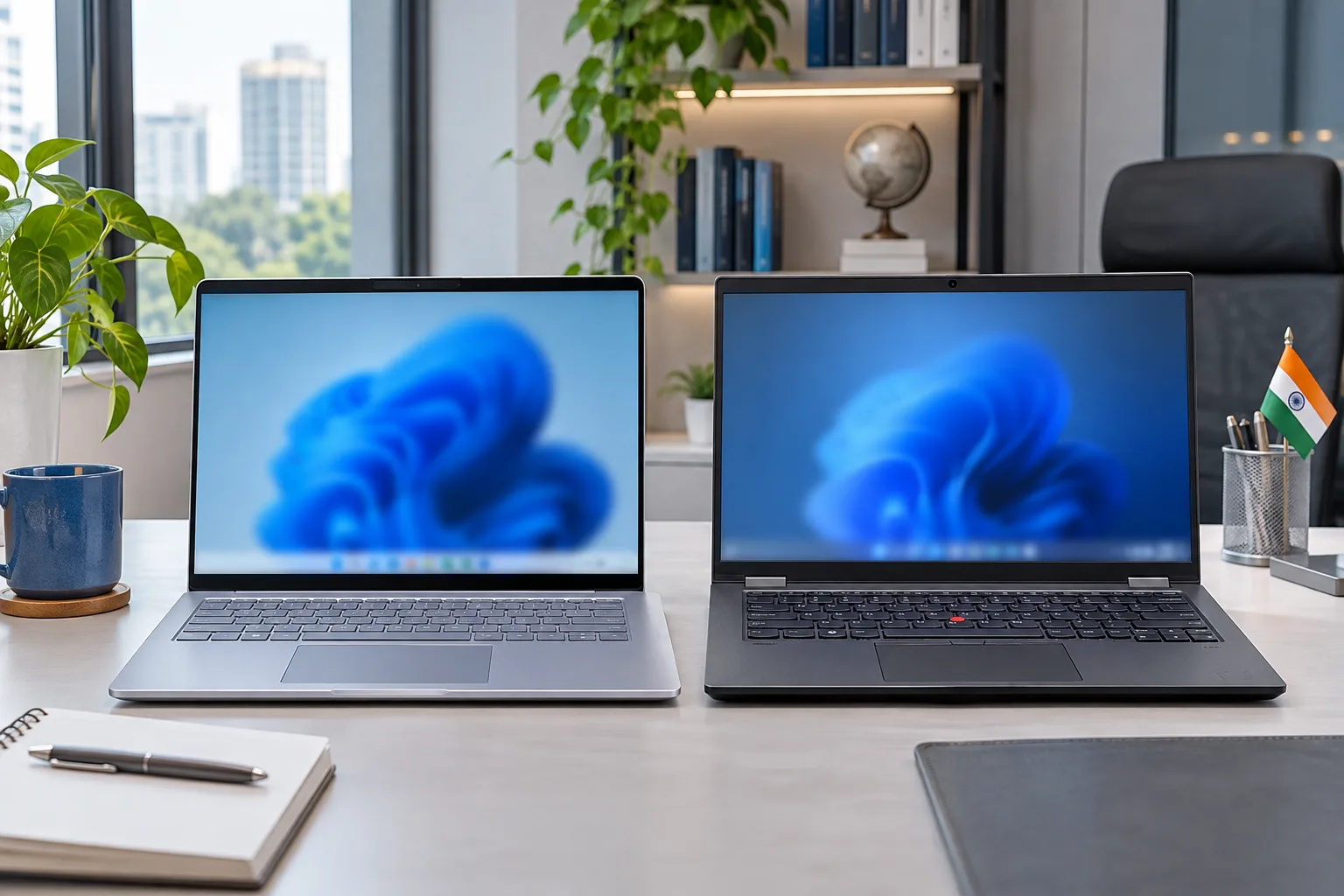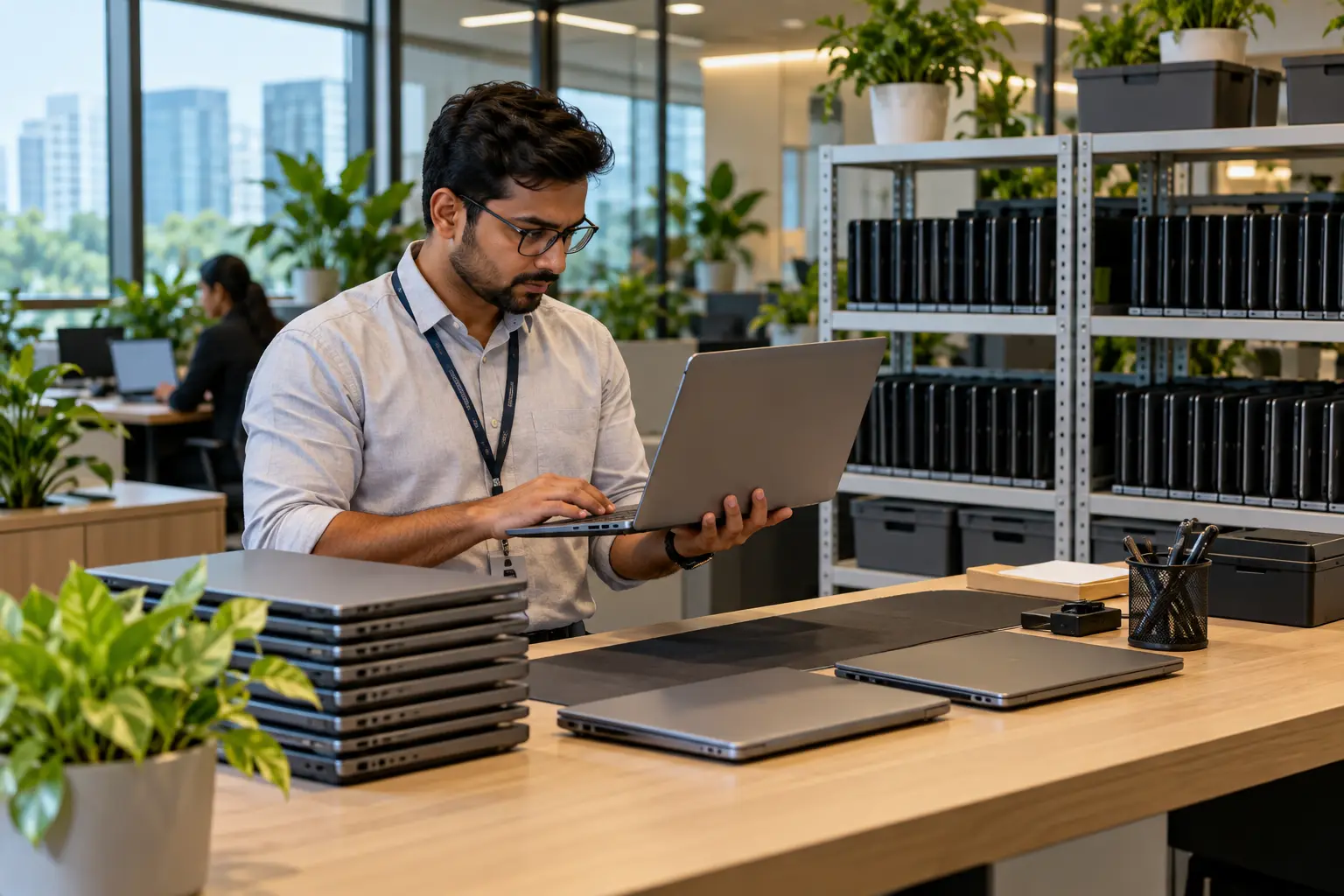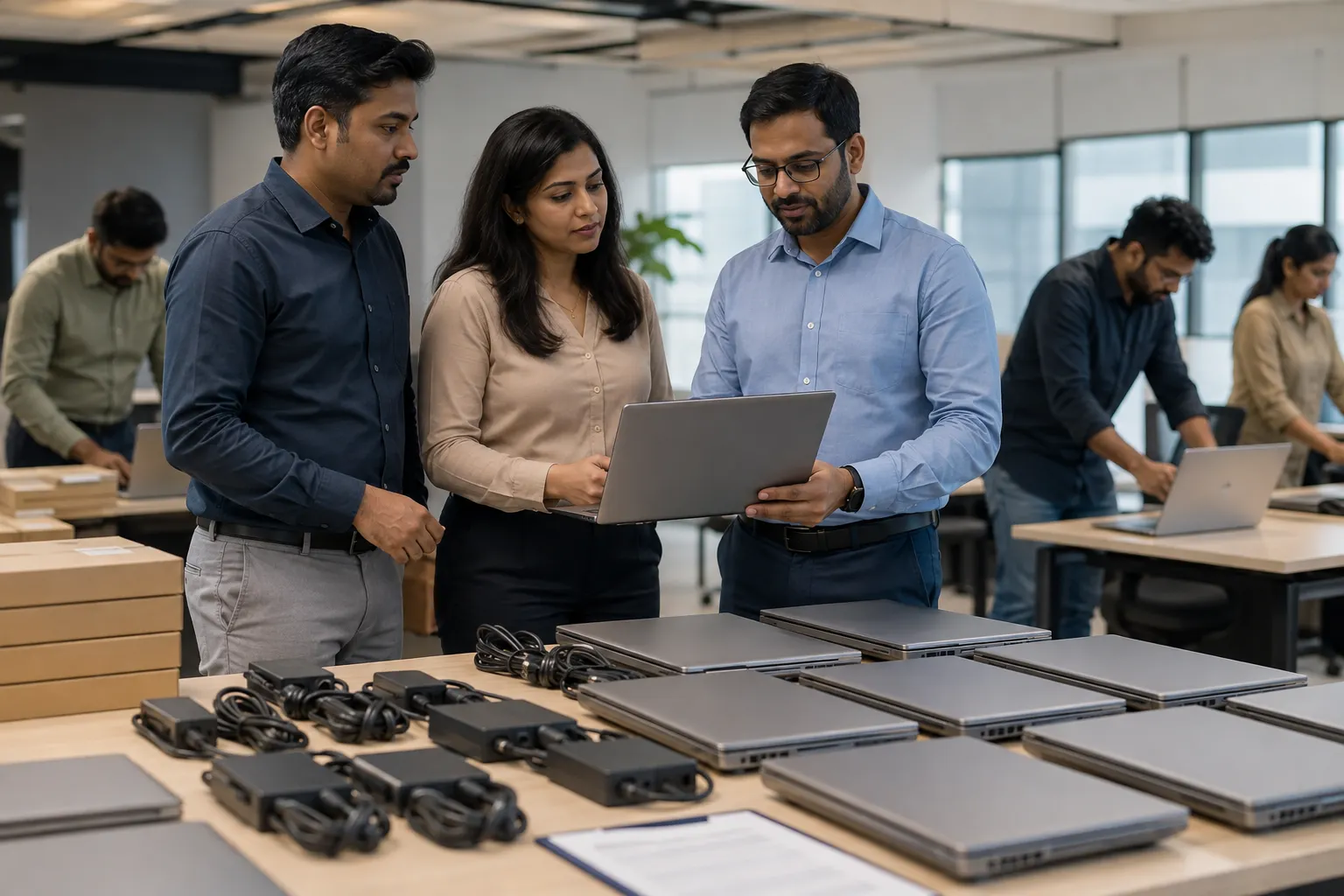
A bulk laptop rental helps companies equip employees, project teams and temporary staff without purchasing every device upfront. Instead of locking capital into hardware, businesses can rent laptops for the period they actually need them.
The final rental cost depends on laptop specifications, quantity, rental duration, delivery location and support requirements. Companies should therefore compare the complete commercial terms rather than choosing a vendor based only on the lowest monthly rate.
This guide explains how corporate laptop rental in India works, what affects pricing, which specifications companies should choose and what procurement teams should check before confirming a bulk order.
What Does Bulk Laptop Rental Cost?
The cost of a bulk laptop rental varies because every company has different hardware and deployment requirements. A basic office laptop costs less to rent than a developer system, workstation or premium MacBook.
As of August 2026, laptops listed on Rentlap start from ₹999 per month per device. The final corporate quote can change depending on quantity, configuration, duration, location and current device availability.
For example, a company renting 50 basic office laptops for employee onboarding will have a very different budget from a design agency renting 20 high-performance laptops with dedicated graphics.
When requesting a quote, provide the vendor with:
• Number of laptops required
• Preferred processor
• RAM requirement
• Storage capacity
• Graphics requirement
• Rental duration
• Delivery city or cities
• Expected deployment date
• Operating system requirement
• Accessories required
You can browse the available laptops for rent before preparing your corporate requirement.
What Changes the Bulk Laptop Rental Price?

Several factors influence the final rental amount. Quantity matters, but hardware configuration and rental duration can affect the quote just as much.
A procurement team should understand these cost drivers before comparing vendors.
• Processor: Newer Core i5, Core Ultra, Ryzen 5 and higher processors generally cost more than entry-level configurations.
• RAM: Systems with 16GB or 32GB RAM usually fall into a higher rental category than 8GB models.
• SSD storage: Larger SSDs increase device cost, especially when teams need 512GB or 1TB configurations.
• Dedicated graphics: Laptops with NVIDIA or similar GPUs usually cost more than standard integrated-graphics systems.
• Device quantity: Larger orders may receive customised commercial terms.
• Rental period: The number of days or months can influence the effective monthly cost.
• Location: Logistics costs can vary when equipment must be delivered across multiple Indian cities.
• Laptop category: Business laptops, gaming laptops, workstations and MacBooks have different rental values.
• Accessories: Extra chargers, monitors, docking stations or other equipment can affect the total quote.
This is why companies should request an itemised quotation rather than simply asking, “What is the price for 50 laptops?”
Which Laptop Specs Should Companies Rent?

The most expensive laptop is rarely necessary for every employee. Companies can control rental costs by matching laptop specifications to each job role.
For normal office users, a modern mid-range processor, sufficient RAM and SSD storage usually provide a smooth experience for browser applications, spreadsheets, meetings and business software.
A practical company fleet can be divided like this:
• Administrative and support staff: Core i3/Core i5 or Ryzen equivalent, 8GB to 16GB RAM, SSD storage
• Sales and operations teams: Core i5 or Ryzen 5, 16GB RAM, 512GB SSD
• Developers: Core i5/Core Ultra/Ryzen 5 or above, 16GB to 32GB RAM, 512GB SSD or higher
• Design professionals: Strong processor, 16GB to 32GB RAM and suitable graphics
• Video and 3D teams: Higher-performance processor, dedicated GPU and larger memory
• Executives: Lightweight premium business laptops or MacBooks
Current business laptops such as Lenovo's ThinkPad business systems show how modern corporate configurations combine SSD storage, business-focused processors and professional security features.
Companies using macOS can also review Apple's current MacBook Air specifications before deciding which configuration suits employees.
Is Renting Better Than Buying for Companies?
Renting is often more practical when the requirement has a clear end date or employee strength changes frequently. Buying may make more sense when devices will remain in regular use for several years.
Suppose a company hires 60 employees for an eight-month client project. Buying 60 new laptops means making a large capital investment before the project starts.
With rental, the business pays for access to the equipment during the required period. Once the project ends, the laptops can be returned instead of remaining unused in inventory.
Bulk rental can make sense for:
• Project-based hiring
• Contract employees
• Temporary teams
• Corporate training
• Seasonal recruitment
• Remote workers
• New branch launches
• Events and conferences
• Short-term development teams
Companies should compare the total cost across the actual period they need the laptops rather than comparing one month's rent with the full purchase price.
How Should Companies Calculate Rental Cost?
A good cost calculation separates recurring rental charges from deposits and one-time costs. This gives procurement teams a clearer picture of the real expense.
The basic calculation is:
Monthly rental cost per laptop × number of laptops × rental duration
Companies should then review additional commercial items separately.
These may include:
• Security deposit
• Delivery charges
• Pickup charges
• Taxes
• Additional accessories
• Configuration requirements
• Extended support
• Damage charges where applicable
• Late-return charges
For example, procurement should not treat a refundable security deposit as the same type of expense as the rental fee.
Before approving a quotation, ask the supplier to provide each cost component separately so that there are no surprises after deployment.
Do Bulk Orders Get Better Rental Rates?
Companies renting several devices may receive customised pricing, but there is no universal bulk discount that applies to every order.
The commercial terms usually depend on quantity, laptop specification, duration, city and availability. Renting 100 standard office laptops may be priced differently from renting 20 high-end workstations.
Businesses should therefore ask for pricing based on their exact requirement rather than assuming that a certain quantity automatically qualifies for a fixed percentage discount.
For larger orders, provide a clear device matrix showing how many systems are required in each configuration. This also makes quotes from multiple vendors easier to compare.
What Should Procurement Check Before Signing?
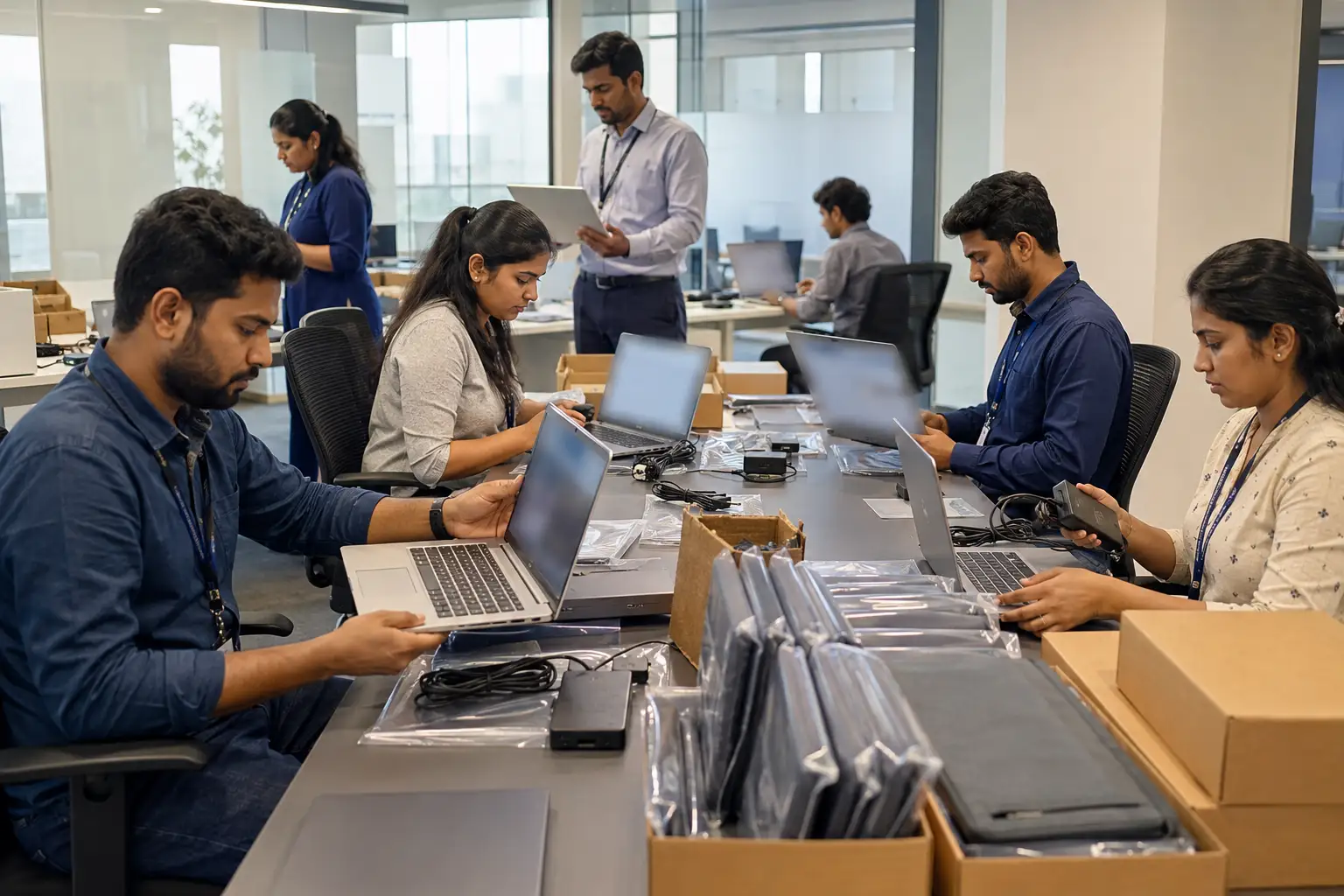
Hardware specifications are only one part of a corporate rental agreement. Procurement teams should also understand deposit, damage, verification and return conditions.
For business orders, Rentlap may request company information, billing details, delivery information and other documents depending on the rental requirement. The KYC verification policy explains the verification process.
Before approving an order, check:
• Security deposit conditions
• Refund timeline
• Device condition at handover
• Damage liability
• Missing accessory charges
• Lost or stolen equipment terms
• Replacement procedure
• Rental extension rules
• Late-return conditions
• Pickup procedure
Rentlap's security deposit policy explains how deposits may vary depending on the rental, while its damage policy outlines customer responsibility for accidental, physical or missing-device issues.
Do not assume that every rental automatically includes insurance. Any insurance or special damage protection offered for a corporate agreement should appear clearly in the written quotation or contract.
What Happens if a Laptop Is Damaged?
Normal hardware failures and customer-caused damage are different issues. Procurement teams should understand how the rental provider separates them.
If a laptop develops a technical fault during normal use, the support or replacement process depends on the agreed rental terms.
Physical damage may include:
• Cracked screens
• Liquid damage
• Broken hinges
• Damaged keyboards
• Missing chargers
• Damaged ports
• Severe body damage
• Lost equipment
Inspect laptops when they arrive and document any existing marks or damage immediately. This gives both the company and rental provider a clear record of device condition.
The Rentlap damage policy explains how damage assessments and charges may be handled.
What Is the Best Bulk Rental Approach?

The best bulk laptop rental plan balances cost, employee requirements and operational flexibility.
Start by separating employees into workload groups. Define suitable specifications for each group, calculate the number of laptops required and decide how long each device will be needed.
Then request a detailed corporate quote covering device configuration, quantity, duration, deposit, logistics, support and return conditions.
For companies that need multiple laptops without making a large upfront hardware purchase, Rentlap provides rental options for business teams across India.
Browse laptops available for rent or submit your corporate requirement to get a quote based on your quantity, specifications and rental period.
FAQs About Bulk Laptop Rental
Companies usually have questions about pricing, deposits, rental periods, documents, data security and large-quantity availability before placing a bulk order. These FAQs answer the most common concerns around bulk laptop rental for businesses in India.
1. How much does bulk laptop rental cost in India?
Pricing depends on laptop specs, quantity, rental duration and delivery location. Rentlap listings start from ₹999 per month, while bulk orders receive customised quotes.
2. Can a company rent 50 or 100 laptops?
Yes. Companies can rent large quantities for projects, employees, training or temporary offices, subject to stock availability and order approval.
3. Do companies get discounts on bulk laptop rentals?
Bulk orders may receive customised corporate pricing. The final rate depends on quantity, configuration, rental period and location.
4. Is a security deposit required for corporate laptop rental?
A security deposit may apply depending on the order value, device type and verification. The exact amount is confirmed in the quotation or rental agreement.
5. What documents are needed for company laptop rental?
Businesses may need company details, billing information, delivery details and KYC documents. Requirements can vary based on the quantity and device value.
6. What is the minimum rental period for bulk laptops?
The minimum rental period can vary by device and corporate requirement. Confirm the required duration when requesting your bulk quotation.
7. Can rented laptops be used for company data?
Yes. Companies should apply their normal security controls, back up important files and remove all company data before returning the laptops.
8. Is renting laptops better than buying for companies?
Renting is often better for temporary teams, short projects or changing workforce needs. Buying may suit businesses that plan to use the same devices for several years.